

Finance & Settlement Overview
12/16/2025
Linking Your Bank Account for Payouts
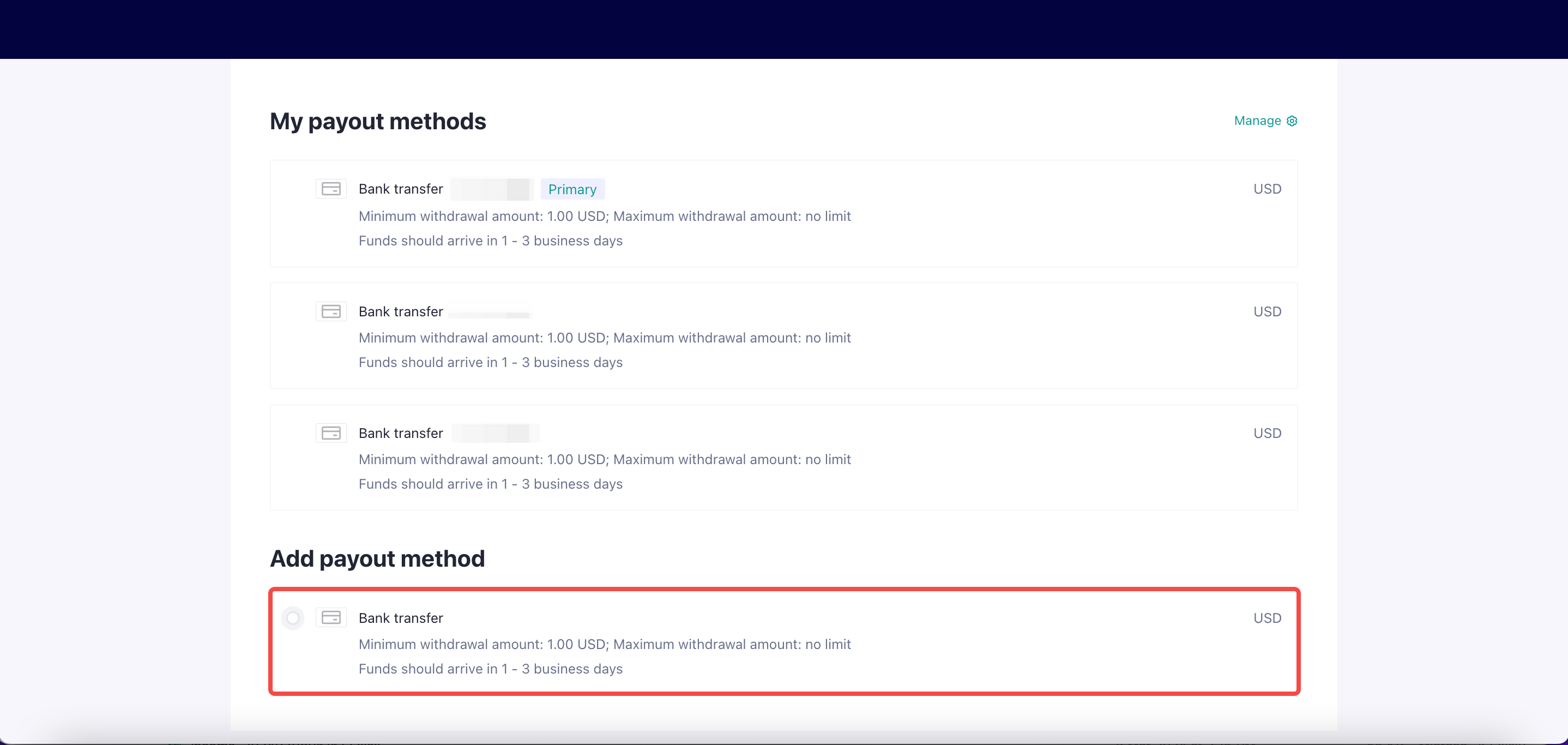
The first mandatory step to receiving your earnings is successfully linking and verifying a bank account.How to Link Your Account
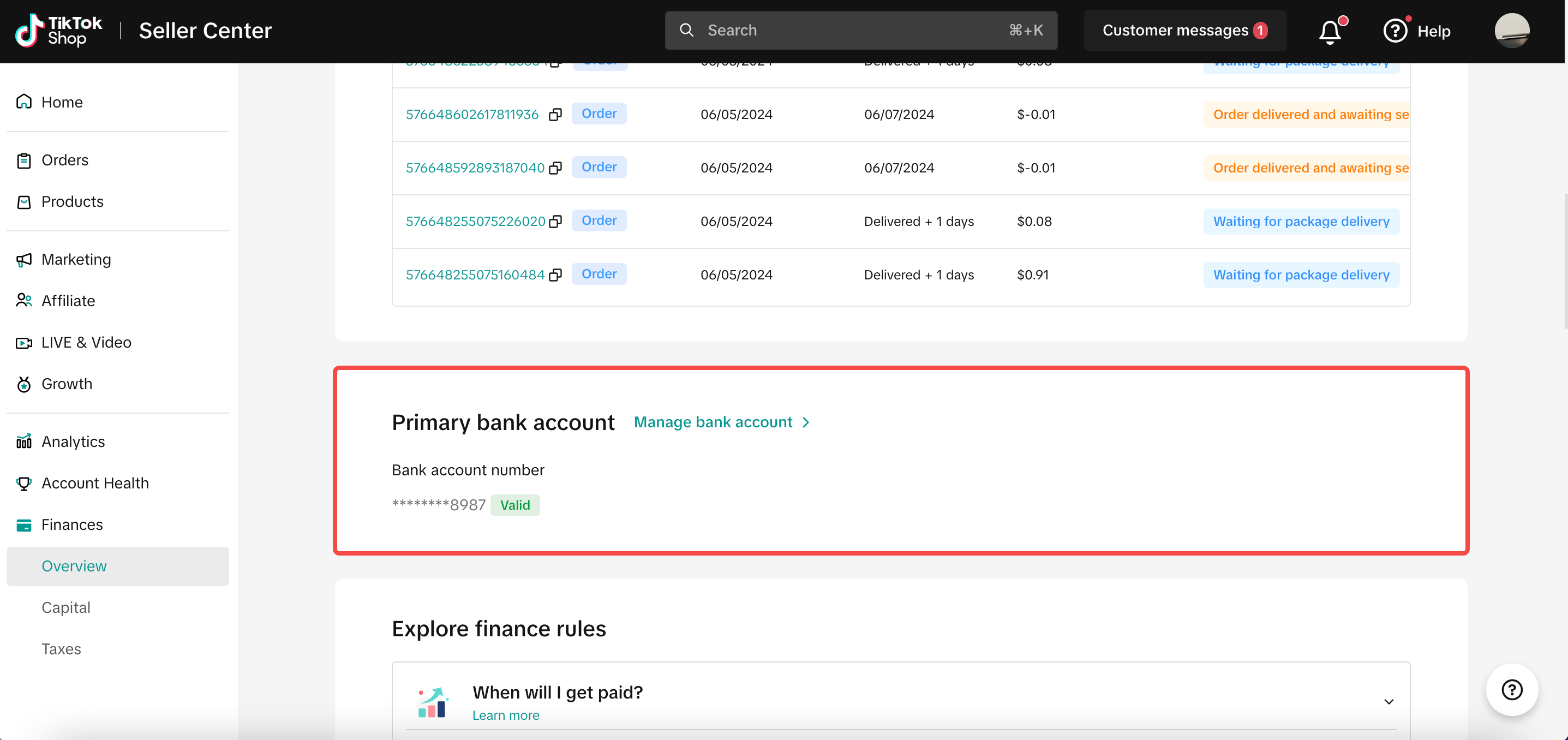
You can initiate the bank account setup from two main entry points in Seller Center:- Navigate to Finances > Overview
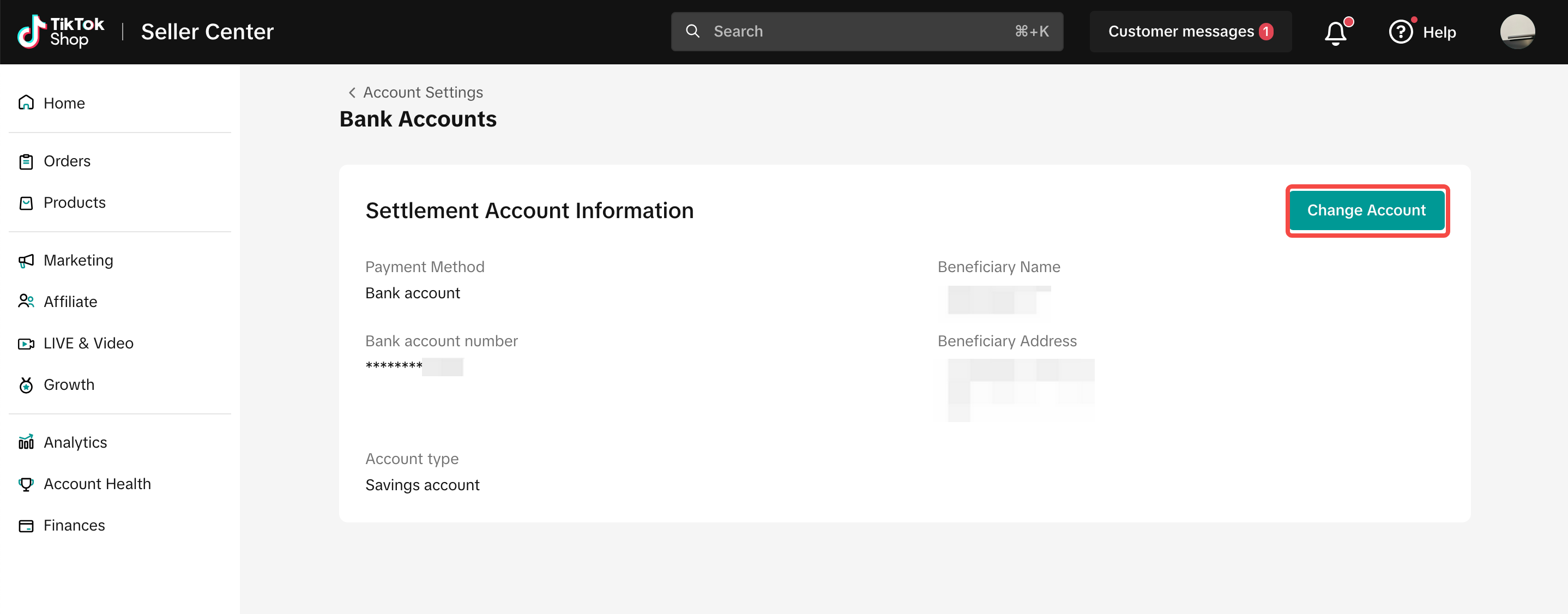
- Go to My Account > Account Setting > Bank Accounts
Owner Authorization and Identity Match Compliance
For security and compliance, observe these strict rules:- Owner Authorization: Only the shop owner account is authorized to initiate or modify bank account details. The system performs a profile check in Seller Center to verify this authorization.
- Identity Match Compliance (Zero-Tolerance Policy): TikTok Shop enforces a zero-tolerance policy requiring the bank account holder's name to match exactly the business name or individual name provided during your initial Seller Center onboarding. Any mismatch will prevent successful linking and payout.
Differentiating Account Types
Ensure you link the correct account type based on your shop's registration:| Shop Registration Type | Required Bank Account Type |
| Corporate/Business | Corporate Bank Account |
| Individual | Personal Bank Account |
| Sole Proprietorship | Personal Bank Account |
Managing Account Changes
If you need to change your primary bank account, understand the financial implications:- Pending payouts (funds already in transit) will be completed via the old account
- Only future payouts (funds settled after the change) will be directed to the new primary account
Managing Payouts & Exceptions
Understanding the settlement process and how financial exceptions are handled is crucial for accurate cash flow management.Settlement Types & Timelines
The settlement period is the time it takes for an order's funds to become available for payout. This clock always begins upon the successful delivery of the order to the customer, not on the order date.Your shop's Shop Performance Score (SPS) determines your eligibility for faster settlement tiers. You must maintain a high score to qualify for and remain in accelerated categories.
| Settlement Tier | Timeline(Days Post-Delivery) | Eligibility/Requirement |
| Introductory | 31 days | For new or probationary sellers |
| Standard | 8 days | The default tier for established sellers |
| Accelerated | 5 days | Requires an SPS of 3.5+ |
| Express | 1 day | Requires an SPS of 4.0+ |
The Impact of Refunds and Returns
Returns and refunds are an inevitable part of e-commerce, but they directly impact your available funds and cash flow. Efficient and proactive management of this process is essential to minimize deductions and mitigate financial risk.Tracing Fund Deduction Source
Understanding where the money for a refund comes from is crucial for balance management. When a refund is processed, the necessary funds are deducted directly from the seller's available wallet or account balance. If the available balance is insufficient, the required amount will be deducted from your next scheduled payout.This system makes active balance management essential. By keeping an eye on your available funds, you can prevent your balance from becoming negative, which could otherwise lead to delays in your next payout as the platform recovers the deficit.
Determining Fee Responsibility (Fault-Based)
The party determined to be responsible for the issue (the "fault") dictates who bears the financial burden of return shipping and associated logistics fees.- Seller-Fault Returns: If the return is due to an error on your part (ex. shipping the wrong item, sending a defective product, or listing inaccuracies), the seller bears the full financial cost of return shipping and handling.
- Non-Seller-Fault Returns: If the return is due to circumstances outside of your direct control or simply based on customer preference (ex. "change of mind," "doesn't fit," or "no longer needed"), the platform offers assistance to help mitigate your costs.
Leveraging Platform Subsidies
For approved non-seller-fault returns, TikTok Shop often subsidizes a portion of the logistics costs. This crucial platform support reduces the total deduction from your account, helping sellers remain profitable even when a sale doesn't finalize due to buyer preference.Minimizing Financial Risk
The efficient handling of returns and refunds is directly tied to your SPS, which acts as a key financial safeguard. A consistently low rate of seller-fault returns demonstrates operational excellence, contributing to a high SPS.A high SPS is vital because it protects your shop from significant financial penalties:
- Deferred Settlements: If your SPS declines due to poor return management (ex. slow processing or high fault rates), the platform may move you out of faster tiers (Accelerated or Express) and back to the Standard (8-day) or Introductory (31-day) settlement period. This dramatically delays your access to revenue, impacting your working capital and ability to reinvest in inventory.
- Financial Reserves: For shops exhibiting chronically high issue rates, TikTok Shop may require the placement of a financial reserve. This involves holding back a percentage of your sales proceeds for a set period as collateral against future refunds or disputes. This reserve immediately reduces your payout, severely tightening your cash flow.
To learn more about how refunds and returns are financially processed, refer to the official article: Customer Order Cancellation, Return, and Refund Policy
You may also be interested in

How To Access User Management
Overview User Management is where you add staff to your shop management and assign them role(s) with…
How to Navigate All Account Settings and Personalizations
This article will help you find and customize all your account information and related settings unde…
How To Use Delegation Mode
This article will guide you through the what and how of delegation mode. Feature Overview The Dele…

TikTok Shop Official Account Rights and Rules Upgrade
What is TikTok Shop Official Account? The TikTok account that represents the official identity of Ti…
How to Use Holiday Mode
When should you enable Holiday Mode? Suppose you are unable to manage new orders because of holidays…

Shop Probation Program
The Shop Probation Program Welcome to TikTok Shop! We're glad you chose to sell with us. We understa…

How to Manage Team Access to Organization Account on TikTok…
Manage team access to your TikTok Shop Organization Account Manage team access to your official Orga…

Direct-to-Consumers Merchants Self-Verification
How We Help You Win? Exclusive DTC Benefits Summary: Dedicated Onboarding & Operational Support Go…

Help Center Chat Assistant
Why use Help Center Chat Assistant? The Chat Assistant is designed to make managing your TikTok Shop…

How to register as a Corporation or Partnership
Easy Guide to Kick-Start Your Business on TikTok Shop - Business Entity What are the Requirements? A…